
Peering Inside the Black Box (Issue #20)
An interview with artist MarianaJU

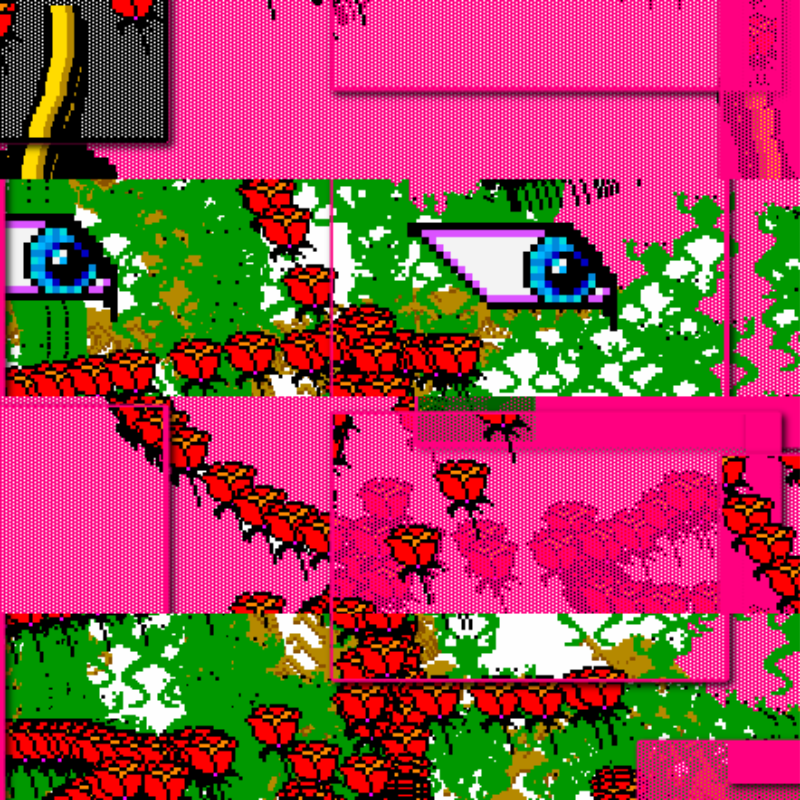
“𝖒𝖎𝖗𝖆𝖒𝖊, 𝖒𝖎𝖗𝖆𝖒𝖊” (MarianaJU image)
1/1: Please introduce yourself.
MarianaJU: I'm MarianaJU, a multimedia artist with an architectural background. I've been working in the crypto art space for the past two years. My work combines 2D and 3D elements to create digital poetry on the blockchain using open-source tools and 3D modeling techniques.
1/1: What art have you been working on lately?
MarianaJU: I've been working on various art projects lately. I'm currently involved in several collections, including KidPix and Floral Reverie, consisting of 3D objects in AR or GLB format, as well as architectural collages. Additionally, I've been experimenting with chlorotypes and collaborating with @stipinpixel on artworks created with pen plotters in off-chain projects.
1/1: Can you describe your workspace/studio and how it influences your art?
MarianaJU: I work from home, which is essentially a small studio apartment, and from wherever I happen to be. In recent months, I've been traveling a lot, so I set up my computer wherever I am. My apartment serves as my small studio. I have a dedicated digital area where I set up my computer and monitor for more comfortable work. I also have another area where I draw, paint, and prepare materials for chlorotyping or other activities that require a mess or different spaces.
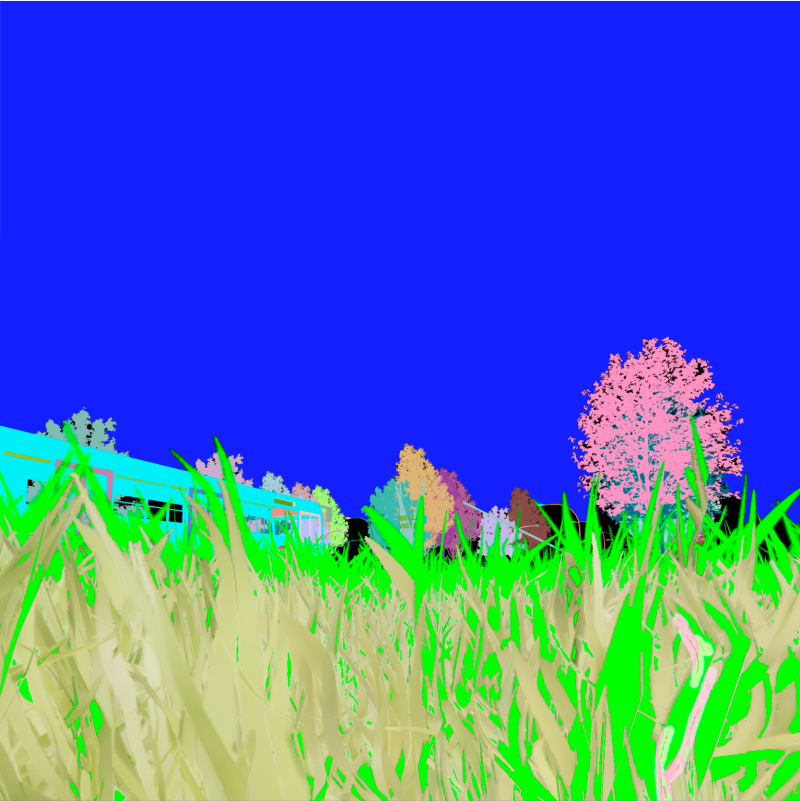
“Where do we fall when we fall?” (MarianaJU image)
1/1: What tools do you use?
MarianaJU: My KidPix works are created exclusively in KidPix; I don't edit them in other programs. For 3D modeling, I use SketchUp and Blender, occasionally using Enscape or Twinmotion for rendering. I also use common editing tools like Photoshop and video editors such as Premiere or Davinci.
1/1: Do you work with any special devices or tools unique to your creative process? We noticed you mentioned KidPix…
MarianaJU: I believe one of the most specific tools I use for my creative process is JSKIDPIX v1.0.2021 | JS KidPix for the web. As for devices, I primarily work with a computer and a mouse, and occasionally, I sketch ideas in a notebook. Drawing with a mouse can lead to more errors, and achieving the desired result often requires redoing a piece multiple times.
1/1: How do you approach developing an idea into a finished piece? Can you walk us through your workflow?
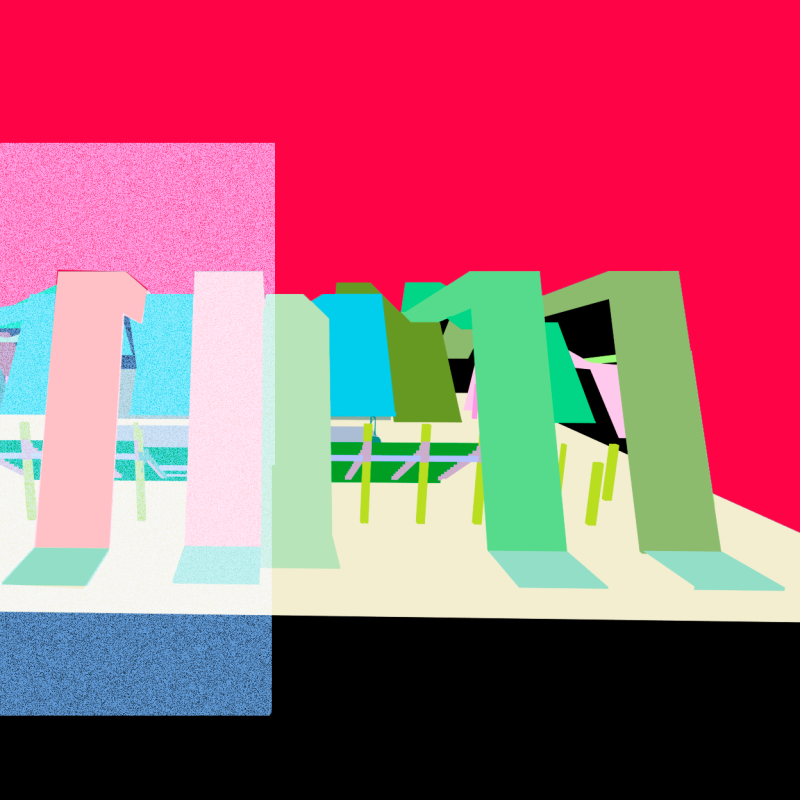
“maybe this time turns out I can fly” (MarianaJU image)
MarianaJU: In my work, about 80% of the process is an internal or "black box" mental process, while the remaining 20% is execution. At times, it's entirely the opposite. I start with a blank canvas and begin drawing or modeling from there, without any preconceived ideas. I think this approach lightens the creative burden in my artistic practice.
1/1: Can you describe a typical day in your artistic practice, including any rituals or habits?
MarianaJU: My typical day starts with yoga, followed by preparing breakfast and reviewing my task list to prioritize deliveries. I also work on architectural projects, which are usually at the top of my list. Twice a week, I have classes at an art residency. Fridays are dedicated to testing the pen plotter and techniques. I reserve one day to visit art exhibitions in my city with a friend or engage in social activities. I believe these activities are essential in my artistic practice, as they provide an opportunity to relax and appreciate what other artists are producing without focusing solely on my work. Lately, I've been trying to establish a more structured routine due to time constraints, with the goal of being as organized as possible.
1/1: You have several collections — alternative gardens, ₛᵤₑñₒ ₘₒᵣ, 8bidou, KidPix Landsapess, 'Low-Res' poems — are they all interrelated to you, or do you see them as separate? And do you work on multiple things at once?
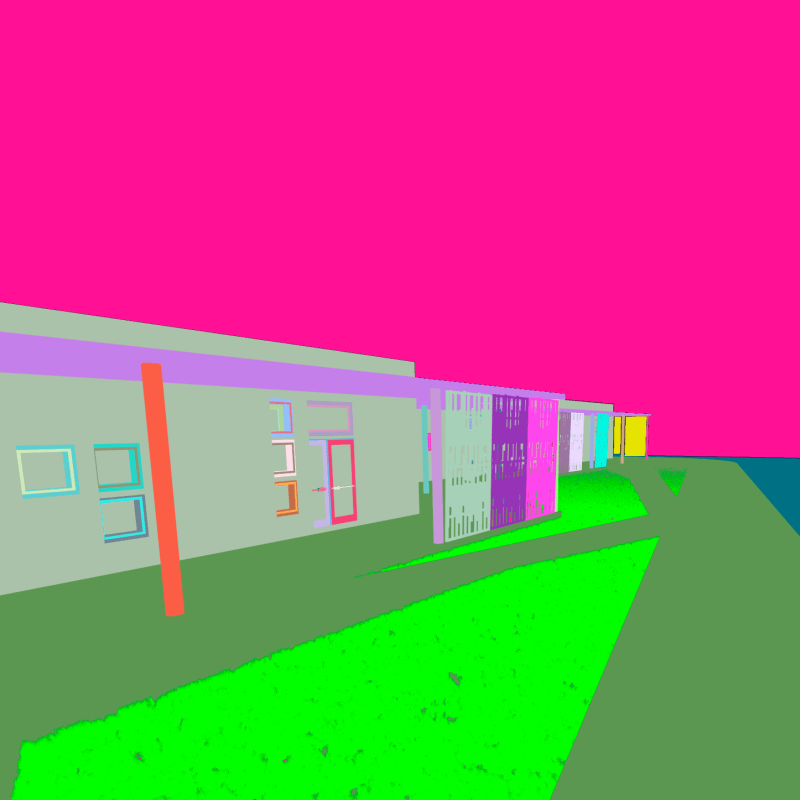
“was it worth it?” (MarianaJU image)
MarianaJU: I believe they are quite interconnected. Each collection carries a certain poetic element. I often start with writing as my initial form of artistic expression and then translate it into visual imagery. Even when these collections are not initially intended to be connected, I find that working on multiple projects simultaneously allows them to influence each other. The constant practice makes it challenging to recognize the patterns one uses when creating. Otherwise, it would have to be a very conscious artistic practice, which I don't think is my approach at this moment.
1/1: What role does your architectural practice play in your artwork?
MarianaJU: Undoubtedly, my architectural background influences the way I compose a piece. It directly affects how I schematize and arrange visual elements. Similarly, as a counterposition to my knowledge, I explore the concept of "non-composition" in my work. This intentional approach to composition, where color palettes don't necessarily harmonize, may seem like an incorrect choice to some, but it's a deliberate artistic decision that I make.
1/1: Do you have any new collections on the horizon?
MarianaJU: I don't currently have a new collection in the works. Instead, my focus is on continuing to explore the existing collections I've defined. Looking ahead, I am particularly interested in merging my digital and physical artistic practices, which is what excites me the most at the moment.
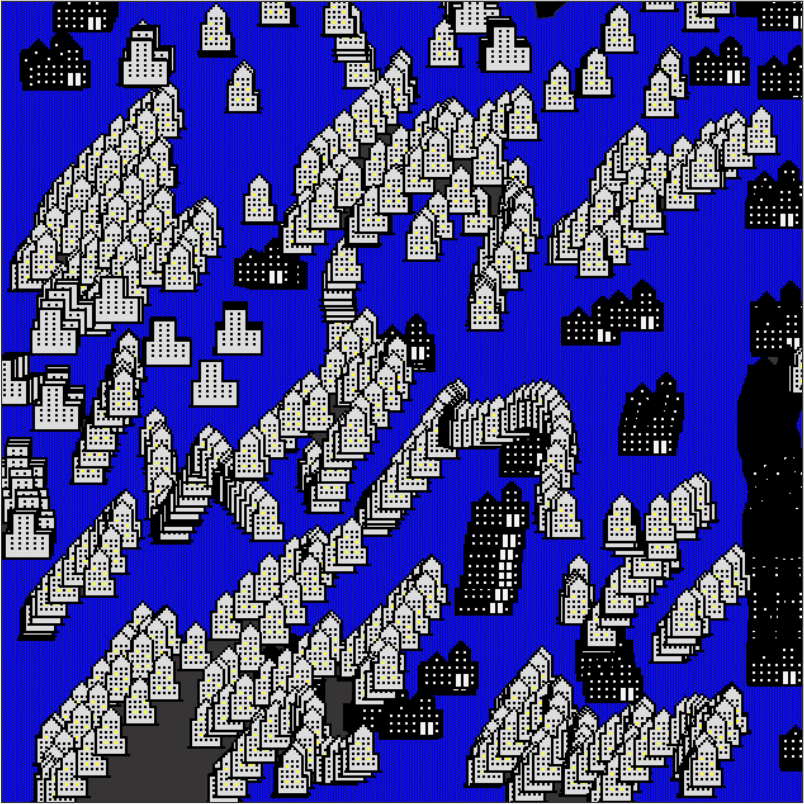
“𝗞𝗶𝗱𝗣𝗶𝘅 𝗹𝗮𝗻𝗱𝘀𝗰𝗮𝗽𝗲 𝟬𝟭” (MarianaJU image)
1/1: Are there any specific works of art (music, literature, film, etc.) that inspire or have significant meaning to you in your artistic practice?
MarianaJU: I constantly consume art and engage with friends in their artistic practices, many of which are not in the Web3 space. This makes it somewhat impossible for me to define my inspiration to just a few specific works. However, if I were to mention some names, I would include the works of Luis Barragan, Zaha Hadid, and Lu Yang.
1/1: How do you come up with titles for your work?
MarianaJU: I write down a lot of notes on my phone, and titles often emerge from those. Since English is not my first language, I sometimes spell words as they sound, which can lead to titles that may not always make perfect sense. I also enjoy playing with rhymes and occasionally using somewhat dramatic and playful titles.
1/1: For someone just getting into art/NFTs, what advice would you offer?
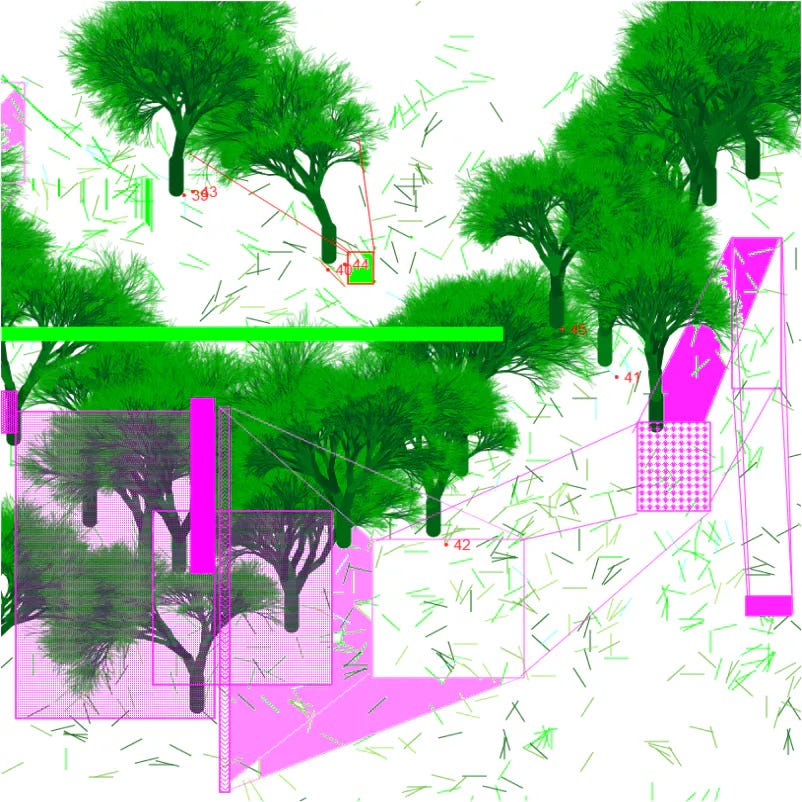
“KidPix Floral Library” (MarianaJU image)
MarianaJU: For newcomers in the art and NFT world, my advice is to keep exploring different styles and art forms. Connect with the NFT community; they are your colleagues and the ones who will show you new ways to create and grow. Collaborate with others; it lightens the load. Share your authentic story through your art. Be patient; not everything happens quickly and successfully. We all have different timelines. Stay informed about the Web3 market to make informed decisions.
1/1: Who are some of your favorite artists in this space?
MarianaJU: @estelle_flores_, @Salawaki_3000, @arbstein, @stipinpixel, @ranxdeer, @FrancoiseGamma.
1/1: Could you show us some of your favorite works and tell us what they mean to you?
MarianaJU: One of my favorite works is "𝖒𝖎𝖗𝖆𝖒𝖊, 𝖒𝖎𝖗𝖆𝖒𝖊." The title has a playful touch to it, reminding me of a friend from uni who used to quietly say, "𝖒𝖎𝖗𝖆𝖒𝖊, 𝖒𝖎𝖗𝖆𝖒𝖊" as a way to grab someone's attention when they were interested in them. When I wrote the poem for this piece, I was in a situation where I was trying to get the attention of someone who had caught my interest at the time. I also think it marked a turning point in the internal structure of the collection because from that point on, all the poems were no longer odes to self-love but rather unfulfilled love.
This piece is one of the works where I experimented the most with non-digital formats, such as chlorotypes, anthotypes, keychains, photocopies, and more. The richness of textures and the poetics of the gaze make me want to keep trying different formats, especially ephemeral ones in contrast to the permanence of the blockchain.
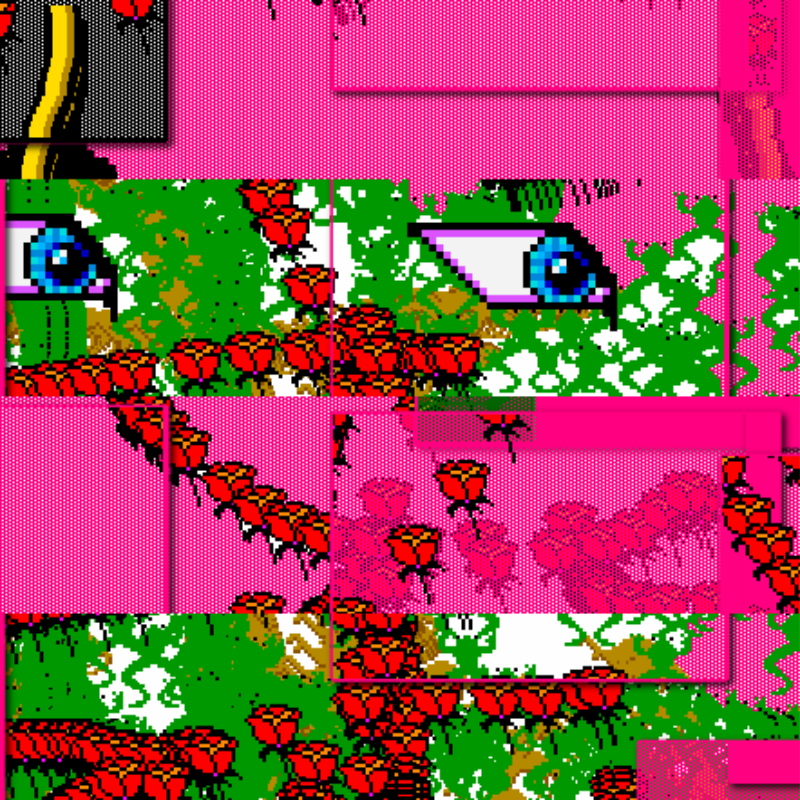
“𝖒𝖎𝖗𝖆𝖒𝖊, 𝖒𝖎𝖗𝖆𝖒𝖊” (MarianaJU image)
1/1: We commissioned a triptych, 'Geometric Gardens 01 - 03.' Could you tell us about it?
MarianaJU: Certainly! 'Geometric Gardens 01 - 03' was a departure from my usual style and a delightful challenge. I aimed to introduce more order and geometry into my art, which was different from my previous work on KidPix. The inspiration came from the Bauhaus Dessau building, particularly its materials, which sparked my exploration of colors and textures within KidPix to create geometric landscapes.
I deliberately chose a palette and patterns distinct from my prior works. Notably, I departed from using red and embraced magenta/pink. I had a longstanding desire to incorporate gray into my compositions, and this time, I approached it with a more polished perspective, moving beyond the influence of concrete-like colors.
This project allowed me to break conventions, experiment with new patterns, and explore diverse visual elements. It was an enriching experience that broadened my artistic horizons.
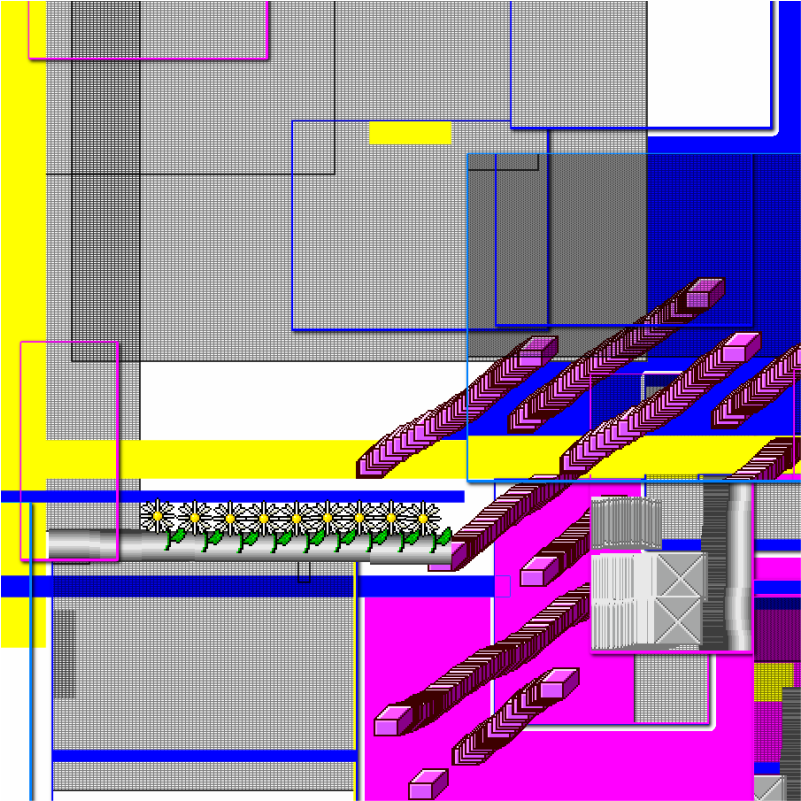
“𝗚𝗲𝗼𝗺𝗲𝘁𝗿𝗶𝗰 𝗚𝗮𝗿𝗱𝗲𝗻𝘀 𝟬𝟭” (MarianaJU image)
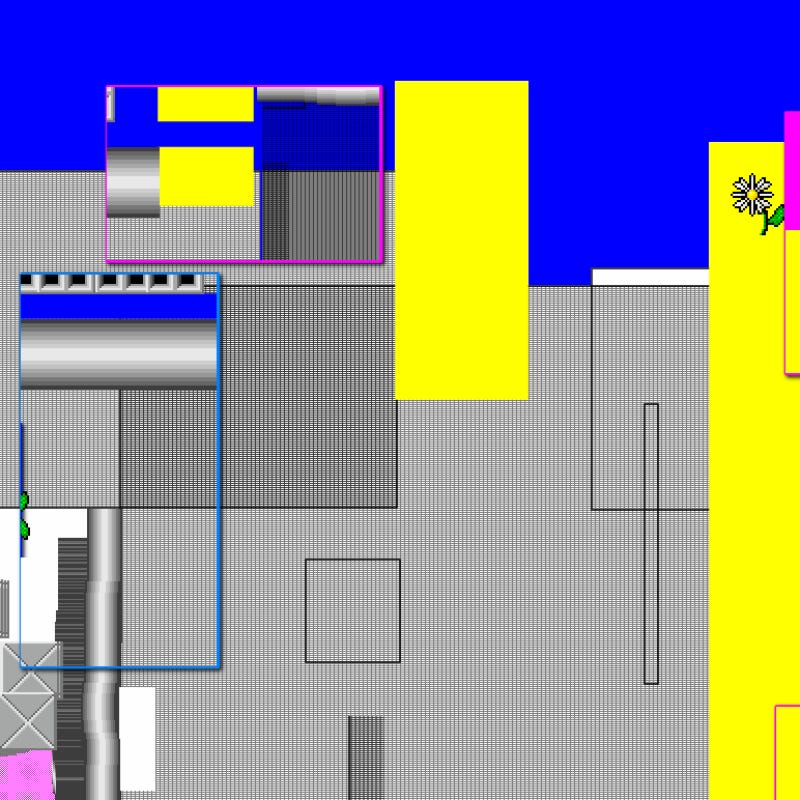
“𝗚𝗲𝗼𝗺𝗲𝘁𝗿𝗶𝗰 𝗚𝗮𝗿𝗱𝗲𝗻𝘀 𝟬2” (MarianaJU image)
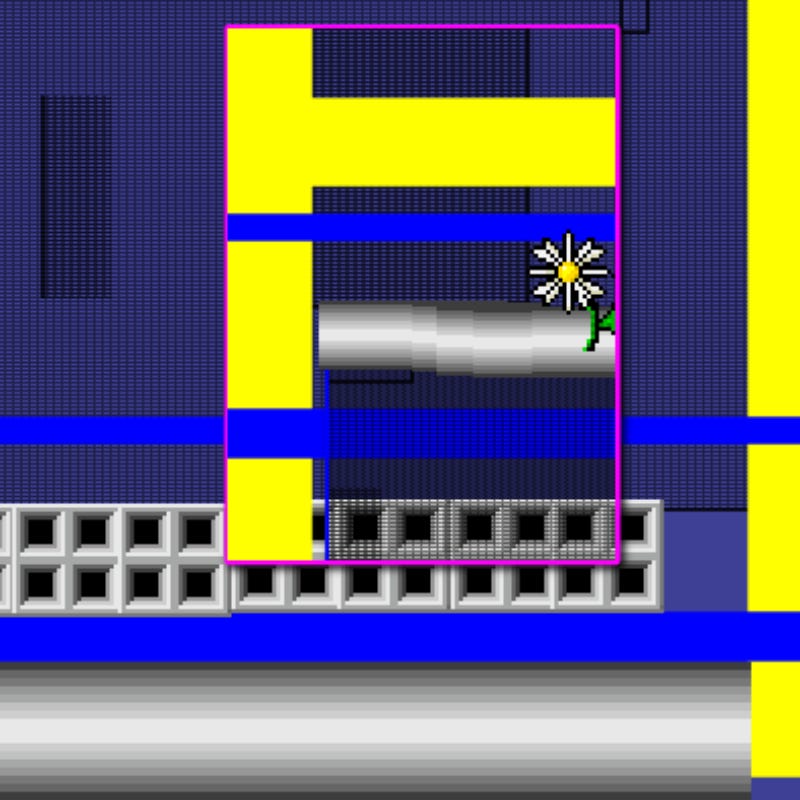
“𝗚𝗲𝗼𝗺𝗲𝘁𝗿𝗶𝗰 𝗚𝗮𝗿𝗱𝗲𝗻𝘀 𝟬3” (MarianaJU image)
1/1: This triptych falls within your KidPix Landscapess collection, and we see that there is now a 'Geometric Gardens 04' — do you see a direction or end point for this series?
MarianaJU: This triptych is part of my KidPix Landscapes collection, and I've also crafted a 'Geometric Gardens 04.' As for the direction or final point of this series, I've recently completed a 'Geometric Garden 05.' I'm now prepared to delve into fresh artistic landscapes within the realm of KidPix.
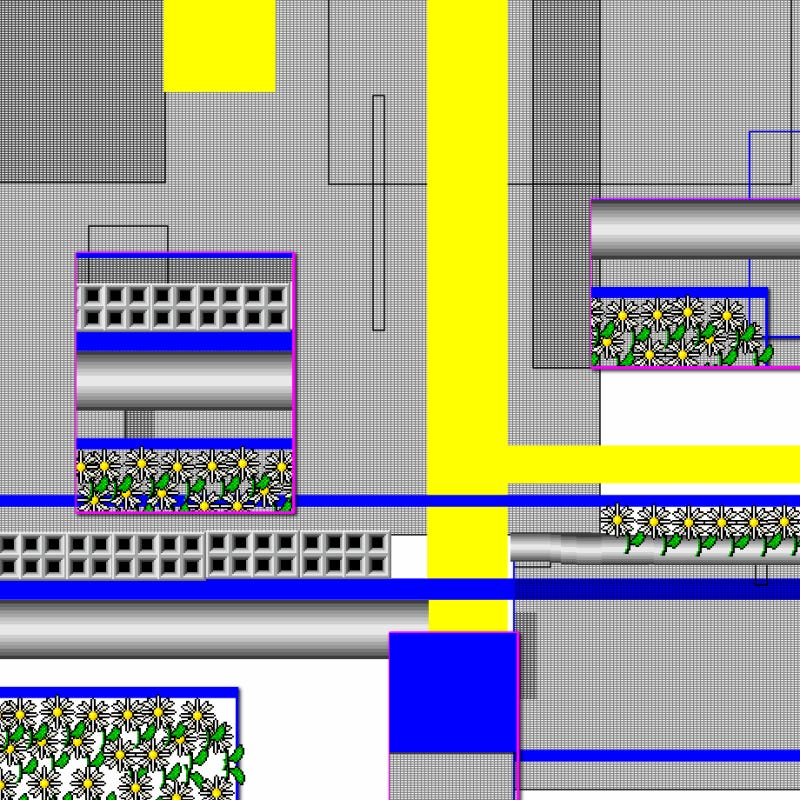
“𝗚𝗲𝗼𝗺𝗲𝘁𝗿𝗶𝗰 𝗚𝗮𝗿𝗱𝗲𝗻𝘀 𝟬4” (MarianaJU image)
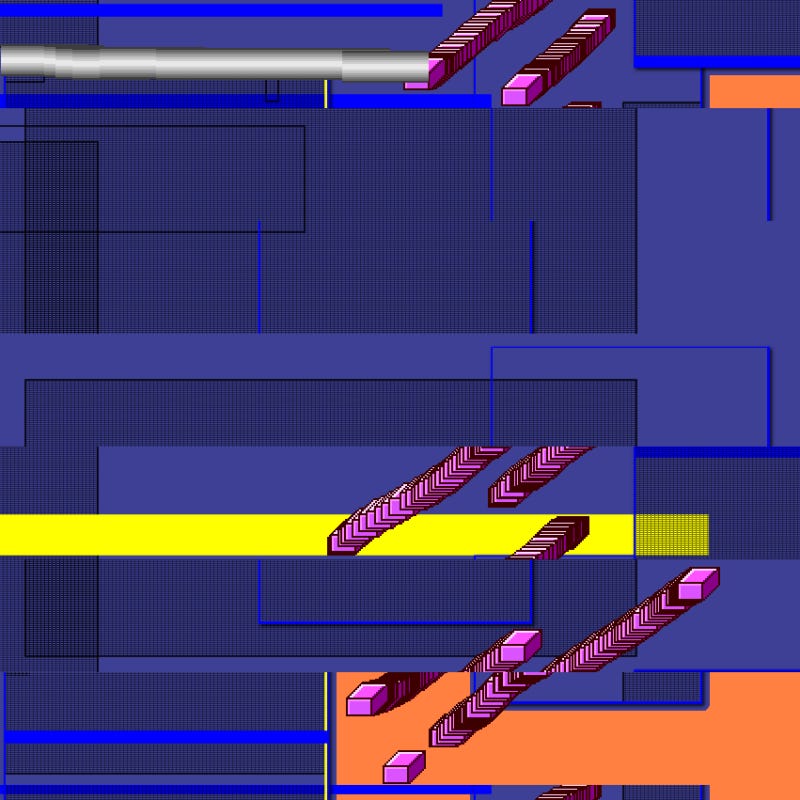
“𝗚𝗲𝗼𝗺𝗲𝘁𝗿𝗶𝗰 𝗚𝗮𝗿𝗱𝗲𝗻𝘀 05” (MarianaJU image)